
The Outer Rim
Trying new things we may not enjoy.
Today’s writing is actually about pots. Imagine that! After almost two years of discussing everything else under the sun and complaining about time management and work-life balance, I finally got around to talking about pots on the Pottery Dailies.
As I may have mentioned before, I’ve been taking a 9-month online Zoom class with the artist and maker Amy Palatnick, and when we got to bowls with rims, I knew I needed to at least try them. For years, I had a beef with bowls with rims as they seemed to take up too much space in the kiln, among other things. This post will explore forms, lines, compositions, and philosophy.
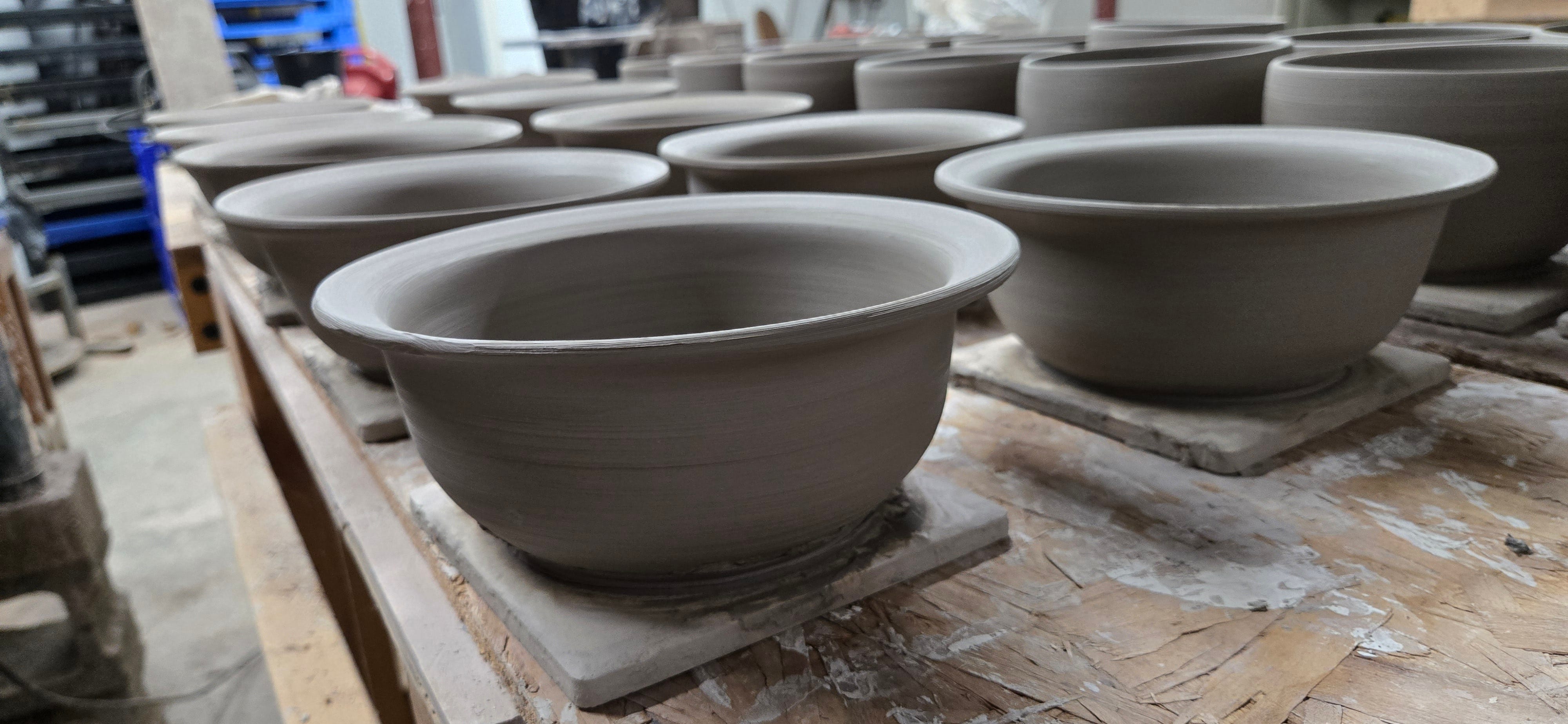
Many times, when making many pots, makers and artists need to think about not only how they look but also how they’ll fit into the production process. At times, pots will be made with features to make other parts of the making and finishing easier. For example, some might take the time to trim a foot to a bowl. This is not only to elevate the form off the table to make the shape look more pleasing, but it also functions as a place to hold the bowl while glazing.
I had no idea what function a rim on a bowl might have other than creating a thicker line around the dish you were eating from, and also as a handle for lifting hot dishes to carry. I disliked rims as they took up more shelf space, as they are much wider. When a form takes up more shelf space, that means fewer pots in the kiln. However, I decided to take a chance and try something I always thought I may not enjoy.
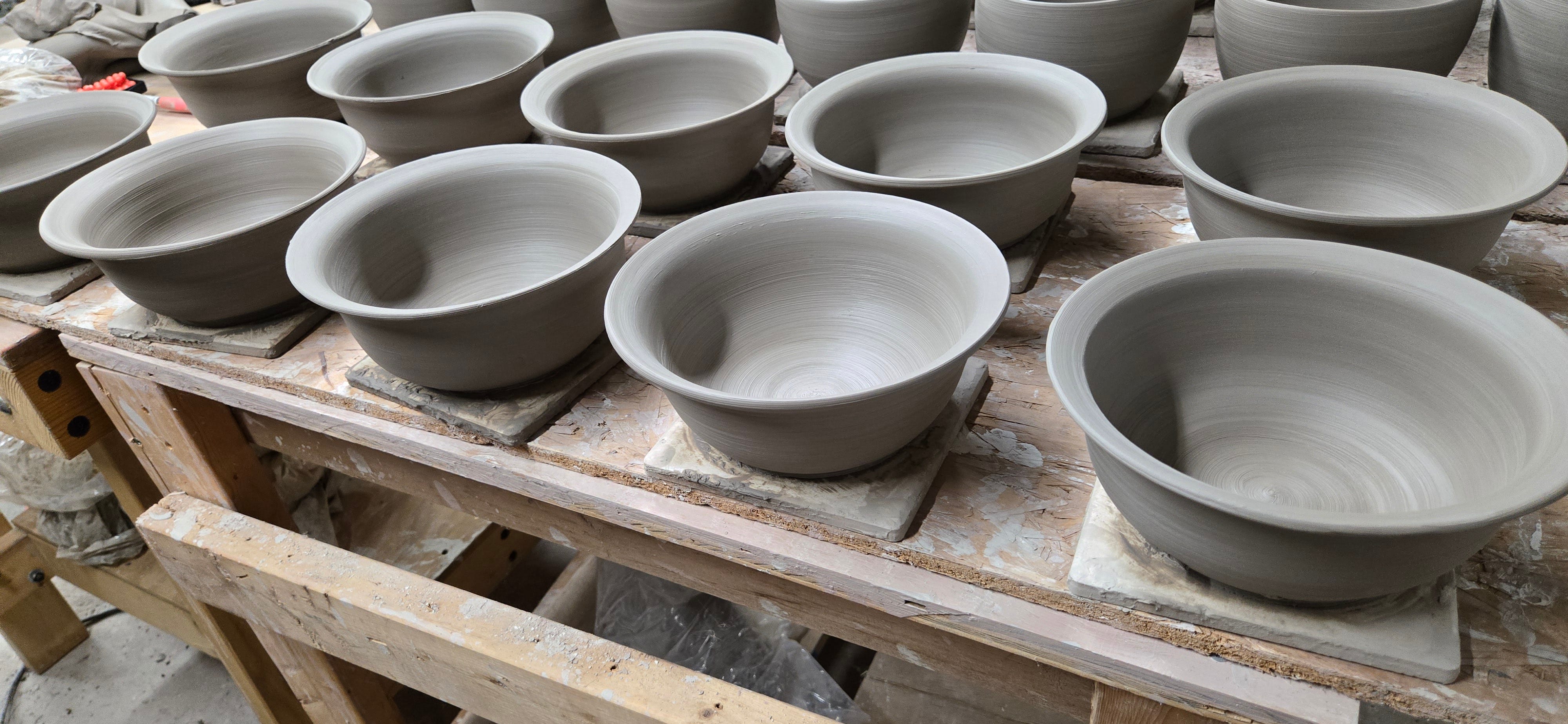
The first ten bowls with rims went terribly as expected. I had to work out a prototype, such as weight, width, height, rim width, rim thickness, and also the shape. Height, for example, was important because when dried, you need them to fit on shelves with other short forms like mugs. Width is also important because they still need to be large enough for a serving of food while at the same time not take up too much room on the kiln shelf. By the time I made ten, I was starting to feel better, but there was still the lingering silly feeling that maybe I was making a bunch of clay women’s hats from the 1920s.
The magic of rims happens when they’re finished, not when they’re being made and processed. Bowls with rims create some great-looking lines when glazed and finished, and all stacked inside each other. Also, even though you may lose space with size in the kiln, you can make up for it by stacking. If created and thrown correctly, two or three bowls could be stacked inside each other and still be the same height as a mug.
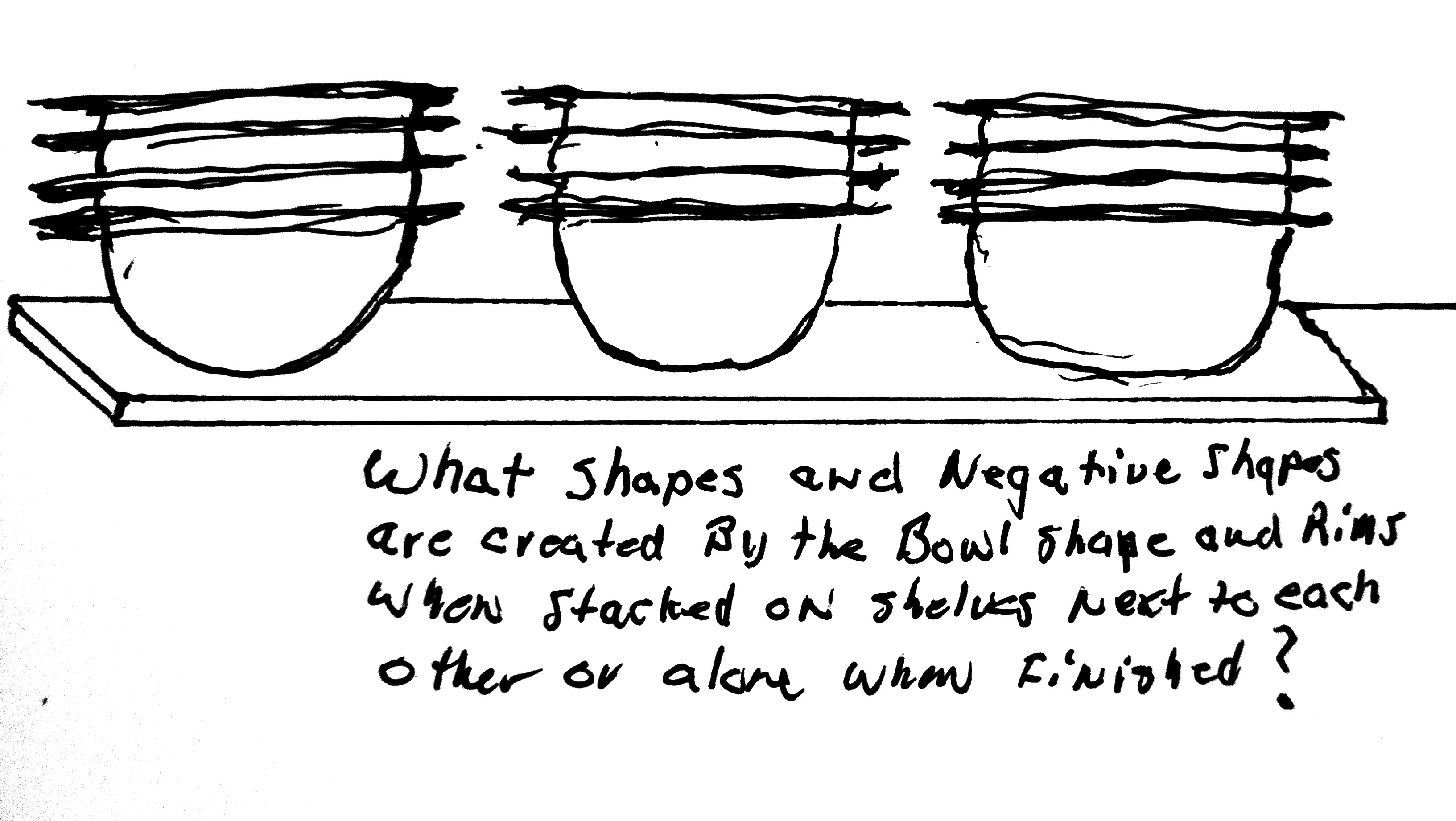
Finished forms are also considered in groups, by themselves, or in stacks together. Some makers might use creativity in this area to see if the rim gaps between bowls are even as they stack inside each other. Then, when the stack is placed with other stacks, what shapes are created, and what story is told when you open a cupboard to reach for a bowl? Also, at times, I will fill all the forms up with a solid color material like milk or black coffee to see how the negative shape looks inside the bowl and how the rims look when the form is filled.
A great book on the form and function of pots is titled Functional Pottery by Robin Hopper. The book goes over many of the ideas I’ve been covering here. So all of these ideas about design also go on top of the other questions about who you’re making the pots for and why.
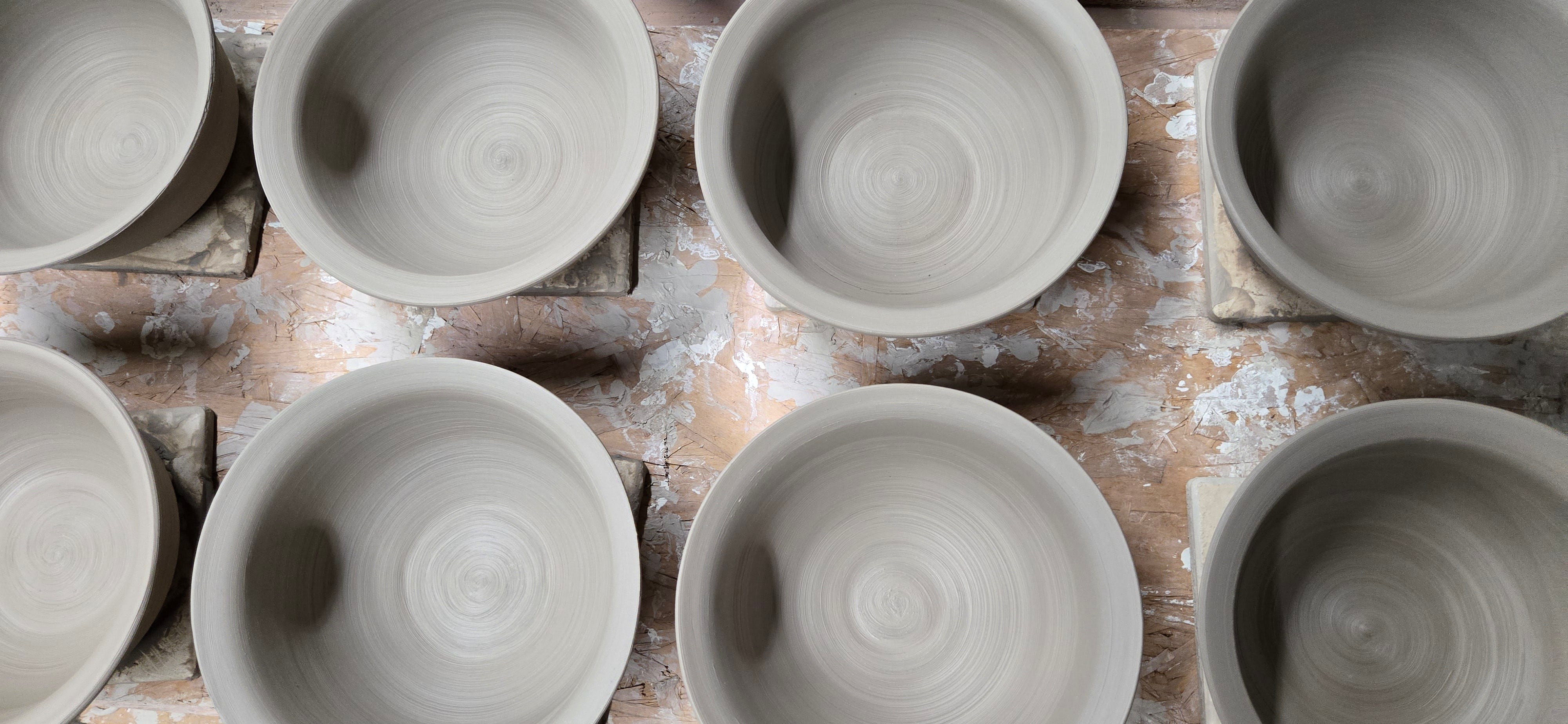
So today I have actually talked about pots and gone over things to consider when making. I even made you a terrible little hand-drawn sketch. There is no set way or rules in pottery, just be safe and not die. Everything we do is practice. No Department of Homeland Pottery will show up and tackle you for doing things your own way. As a matter of fact, doing what works for you might be the best way. Why fix a thing that isn’t broken? However, it’s also good to work through new challenges and try things we may not enjoy because in the long run, you may actually enjoy them. I need to make about 50 more of these to get good at it, and also need to work the bowl shapes more and the rim finishing when throwing.
Should I write more Dailies like this? Let me know!
If I were living yesterday a second time: I would have made five more rimmed bowls instead of doubting they looked like 1920s hats.
Things I am grateful for: Amy Palatnick’s class pushing me to try things I resisted for years. And for the reminder that sometimes the forms we avoid teach us the most.
If I get to live to be 86, I might only have: 12,917 days left to make pots worth writing about.
While I would have to agree they do kind of look like women's hats, I like the shape of them and they look like they could hold something delicious.